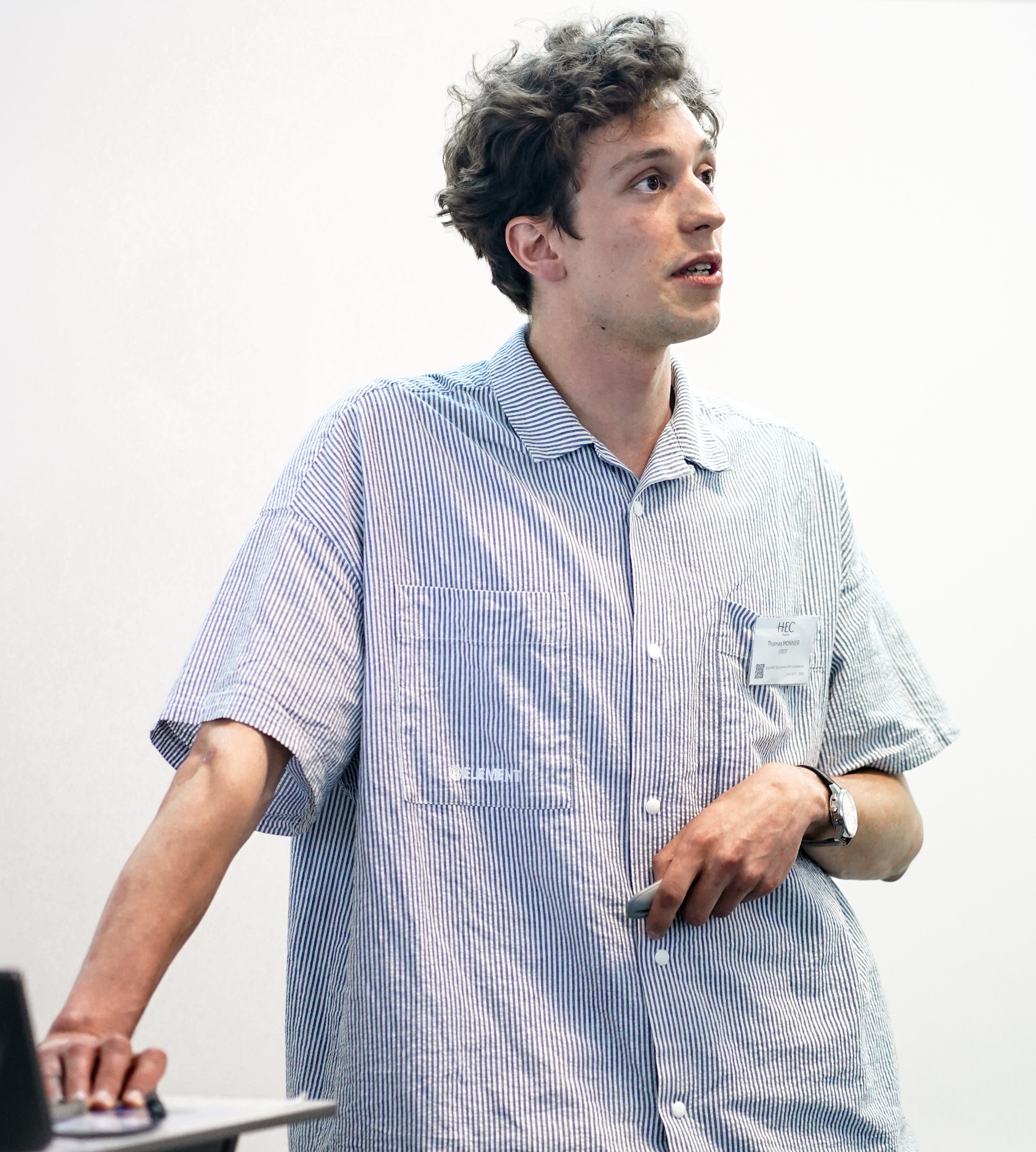
Bio
As an economist, I study the behaviour and interactions of individual workers and firms, and the aggregate consequences for consumption and production. I specialize in labour and housing markets (how wages and rents are determined) and the public policies that affect them. In my current work, I specifically look at the impact of such policies for cities in low- and middle-income countries and draw more general implications for urban development. To do so, I use spatial models to make data-informed mathematical predictions.
For instance, I have been studying the role of the informal economy in South Africa. As an emerging country, South Africa’s economic growth is closely linked to its urbanization rate, since cities favour the rise of modern, productive industries. However, this change is not being met by a concurrent formalization of economic activity – whereby households obtain formal written job contracts and land tenure rights. This weighs on economic development since informal workers and firms do not benefit from legal protection, are not subject to taxes and benefits, and cannot use formal financial and insurance markets for their investments.
Nonetheless, I show that regulating the informal economy by imposing fines on non-complying firms or evicting slum dwellers may stifle economic growth. Indeed, informality acts as a buffer for the growing urban population when job creation or housing construction are constrained. Informality therefore has a temporary role to play in the process of urban development, and I discuss the relative merits of policies that aim instead at relieving these constraints (e.g., education and training, public employment and guaranteed wages, industrial and zoning policies). This leads to policy recommendations that may extend to rich countries where precarious contracts and new technologies take the role of informality and the urban sector.
You can find my full CV here for more details.